Orthodontic treatment in children (commonly referred to as early/interceptive orthodontics) is mainly needed for the following important reasons. If these issues are not addressed during childhood, they often become much harder (and more expensive) to treat in adulthood and may affect a person for life:
1. Correct skeletal problems while the jaw is still growing (the most critical window)
- Ages 6–12 are when a child’s jawbones are rapidly developing. During this period, growth can be gently guided with appliances.
- Common issues:
- “Reverse bite” or “underbite” (lower teeth in front of upper teeth)
- Protruding upper teeth (“buck teeth”)
- Facial asymmetry or deviated chin
- If this golden period is missed, adults often require orthognathic surgery + braces to fix the problem, which is far more invasive and costly.
2. Create space for permanent teeth and reduce the chance of extractions later
- Many children lose baby teeth too early or have untreated cavities, causing insufficient space for permanent teeth and resulting in crowding.
- Early expansion of the dental arches through arch development or sequential treatment provides room for permanent teeth, often eliminating the need for tooth extraction during adult braces.
3. Break bad oral habits and prevent worsening of malocclusion
- Common harmful habits: thumb-sucking, lip-biting, mouth breathing, tongue thrusting, and unilateral chewing on one side only.
- Left uncorrected, these can lead to open bite, deep bite, gaps between teeth, etc. The longer they persist, the harder they are to correct.
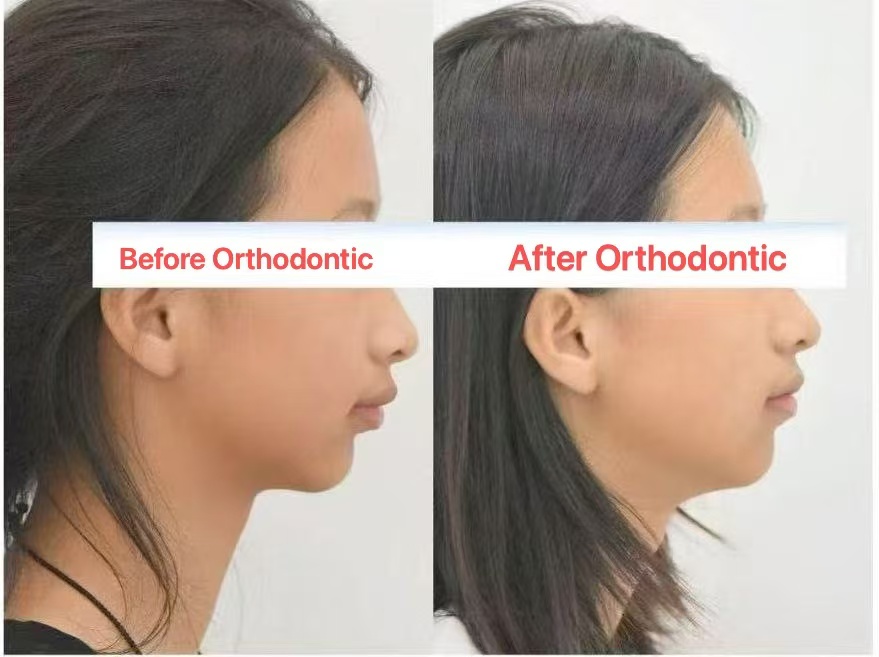
4. Improve facial development and appearance
- Severe crowding, protruding teeth, or underbite can affect a child’s profile and smile.
- Early intervention helps children enter adolescence with a more harmonious facial appearance and greater confidence.
5. Prevent future gum disease and temporomandibular joint (TMJ) disorders
- Crowded or misaligned teeth are hard to clean → higher risk of gum disease and cavities.
- Bad bite relationships (deep bite, underbite, etc.) place uneven stress on the jaw joint, which can lead to clicking, pain, or limited mouth opening in adulthood.
When should you take your child to see an orthodontist?The American Association of Orthodontists (AAO) recommends: The first orthodontic evaluation should be no later than age 7.Situations that typically require early intervention:
- Ages 7–9 (mixed dentition): underbite, severe deep bite, functional jaw shift, severe crowding
- Ages 10–13 (especially earlier in girls): most common dental malocclusions (protruding teeth, crowding, etc.) achieve the best results when treated during this growth spurt
One-sentence summary:
Children’s orthodontics is not just “for looks”; it takes advantage of the period when the jaws are most malleable to solve potentially lifelong problems with the easiest, least invasive, and most cost-effective way possible.